
BioMS Centre:
Country: Italy
City: Orbassano (Turin)
Institution: University Hospital San Luigi Gonzaga, Department of Neurology – CRESM
Website: https://www.nico.ottolenghi.unito.it/Ricerca/Gruppi-di-ricerca/Neurobiologia-clinica
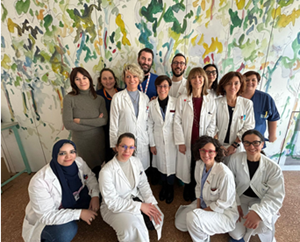
PI/Co-PI: Alessia Di Sapio, (MD), Neurologist, DirectorDept Neurology – CRESM a.disapio@sanluigi.piemonte.it, biobanca.cresm@sanluigi.piemonte.it
Co-PI: Simona Malucchi, Neurologist, Dept Neurology – CRESM s.malucchi@sanluigi.piemonte.it
Team members (name, position and contact e-mail):
Lucia Giorgi, research fellow,Clinical Neurobiology Laboratory, CRESM Biobank, Dept Neurology – CRESM l.giorgi@sanluigi.piemonte.it
Arianna Sala, Resident Biologist, Clinical Neurobiology Laboratory, a.sala@sanluigi.piemonte.it
Chiara Sciolla, Study Coordinator, Dept Neurology (CRESM), c.sciolla@sanluigi.piemonte.it
Paola Valentino, Resident Biologist, Clinical Neurobiology Laboratory, CRESM Biobank p.valentino@sanluigi.piemonte.it biobanca.cresm@sanluigi.piemonte.it
Rugiada Bottero (MD), Neurologist, Dept Neurology – CRESM r.bottero@sanluigi.piemonte.it
Marianna Lo Re (MD), Neurologist, Dept Neurology – CRESM m.lore@sanluigi.piemonte.it
Maria Malentacchi (MD), Neurologist, Dept Neurology – CRESM m.malentacchi@sanluigi.piemonte.it
Davide Quartana (MD), Neurologist, Dept Neurology – CRESM d.quartana@sanluigi.piemonte.it
Francesca Sperli (MD), Neurologist, Dept Neurology – CRESM f.sperli@sanluigi.piemonte.it
CReSM (Regional Referring Centre for Multiple Sclerosis, Piedmont) takes care of over 2000 people affected by Multiple Sclerosis and other neurological autoimmune disorders. The Clinical Neurobiology Laboratory of the centre carries out diagnostic activities on CSF, including CSF-NFL and on serum (anti-MOG and antiAQ4 antibodies) as well as translational research aiming to monitor disease course and therapeutic efficacy. The centre also hosts the CReSM Biobank, the first Biobank dedicated to MS in Italy, which actually preserves more than 165000 bio-specimens from 3200 MS patients and 250 healthy participants. The Clinical Neurobiology Laboratory has gained a vast experience in sNFL measurement with the ultrasensitive SIMOA technology since 2018. Today the Laboratory is also working on the implementation of the quantification of the serum glial fibrillary acid protein (sGFAP) as a potential monitoring biomarker of progression in MS patients, as well as biomarker of inflammatory activity in NMOSD patients.